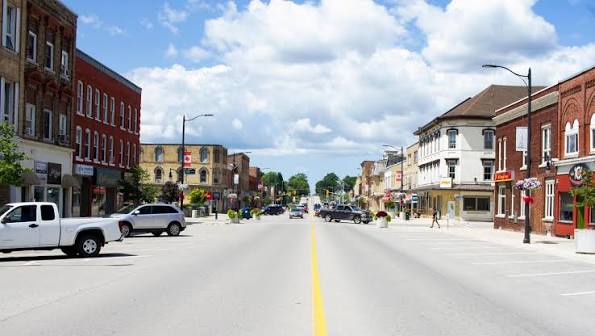
Drive down the main street and you can read a town’s health. Occupied storefronts, people on the sidewalk, a reason to stop — or empty windows and a road everyone just drives through. Mitchell’s downtown is the front porch of this community. Council should treat it that way.
Here’s the thing: council can’t create vibrancy by resolution. But it has real levers, and right now I’d argue it’s not pulling them deliberately enough.
Be predictable. A small business owner deciding whether to open on the main street is making a bet — and right now, even finding the rules is a gamble. West Perth’s own bylaw library stops at 2022; the sign bylaw, property standards, the noise rules are real, but they live scattered across a website and meeting packages. I know because I went looking. Clear, findable rules with published timelines shouldn’t be a research project. Predictability is economic development.
Grow the edges without hollowing the core. Let me be clear: growth on the edge of town can be a good thing — I’ve said the Heron Park development is a good thing. But every big decision still has a downtown consequence: where growth goes, where the town spends, what gets approved. Supporting edge development and weighing the downtown impact aren’t opposites. I’d do both, openly, as part of the decision — not as an afterthought.
Work with the people already doing the work. The merchants and volunteers downtown have their livelihoods and their time on the line. The town’s role is to be a reliable partner — show up, fund its fair share, remove obstacles — not to duplicate or override the people already doing the work.
And there’s a multiplier most people miss: money earned locally gets spent locally. That’s the whole idea behind the local offset program I’ve proposed — when West Perth workers build West Perth projects, their wages land on our main street. An apprentice who gets steady local work becomes a homeowner, a customer, a neighbour. Downtown vibrancy and local jobs are the same project.
Here’s my commitment: measure it. Track the basics — storefront occupancy, what’s opening and closing, how our events are drawing — and publish it. If we’re serious about a vibrant downtown, we should be able to say whether it’s working.
A town that builds up its downtown builds its tax base — and a town that grows thoughtfully at its edges builds it further. That’s the kind of growth I’ll vote for.