
Growth is coming to West Perth whether we plan for it or not. New homes, new buildings, new taxpayers — that’s good news, and I’ve said so before: I support responsible development, because young families need somewhere to live.
But here’s a question worth asking: when a developer builds in West Perth, who does the work?
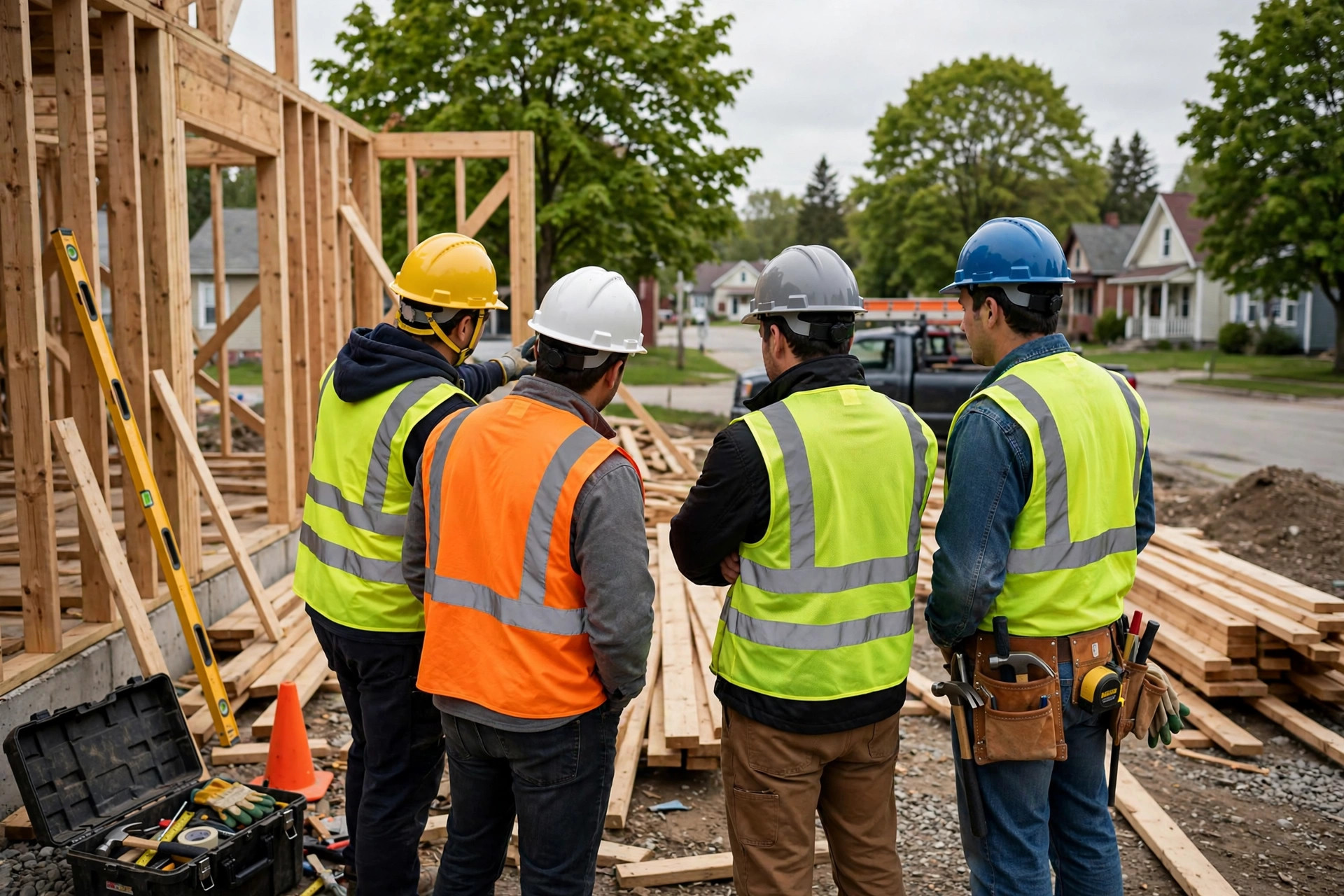
Too often, the answer is crews trucked in from somewhere else. The work gets done, but the wages leave with them. Local tradespeople — the electricians, framers, plumbers, and labourers who live here and pay taxes here, watch the biggest projects in their own town go to somebody else.
I think we can change that with a local offset program: a tax break for developers who use local labour.
Here’s the idea. When a developer builds in West Perth and can show that a real share of the work went to local workers and local businesses — wages paid to people who live here, materials bought from suppliers here — the municipality offsets part of the tax increase on that property for a period of time. Ontario law already gives towns a tool for exactly this kind of thing: a Community Improvement Plan, which lets a municipality offer tax-increment-style grants to encourage the development it wants. We’d be using it to choose local jobs.
A few ground rules make it more than a giveaway:
- Earned, not automatic. No local hiring, no break. The offset is paid after the work is done and the local employment is shown — not promised on the front end.
- Provable. Developers would report local labour hours and local purchasing as part of the program, in plain numbers council and residents can see. If the numbers aren’t there, the offset isn’t either.
- Capped and time-limited. A fixed budget, a fixed window. Council reviews it annually, and if it’s not producing local jobs, it ends.
- Reported publicly. Every year, residents should be able to see what the program cost and what it bought: how many local jobs, how many local contracts, how much of the development dollar stayed in West Perth.
Why do this? Because a development pays us twice when local people build it: once in the new tax base, and again in wages that get spent at businesses on our own main street. A young apprentice in West Perth who gets steady work on a local build is someone who stays, buys a home here, and raises a family here. That’s the kind of growth that strengthens a town instead of just enlarging it.
I’m not naive about it — this has to pencil out, and the details matter. What counts as “local”? How big an offset justifies how much hiring? Those are fair questions, and they’re exactly the questions a council should work through in public before a single dollar moves.
If I’m elected, I’ll bring this forward: a local offset program that rewards developers for putting West Perth people to work on West Perth projects.